
Internal Family Systems (IFS) therapy Overview
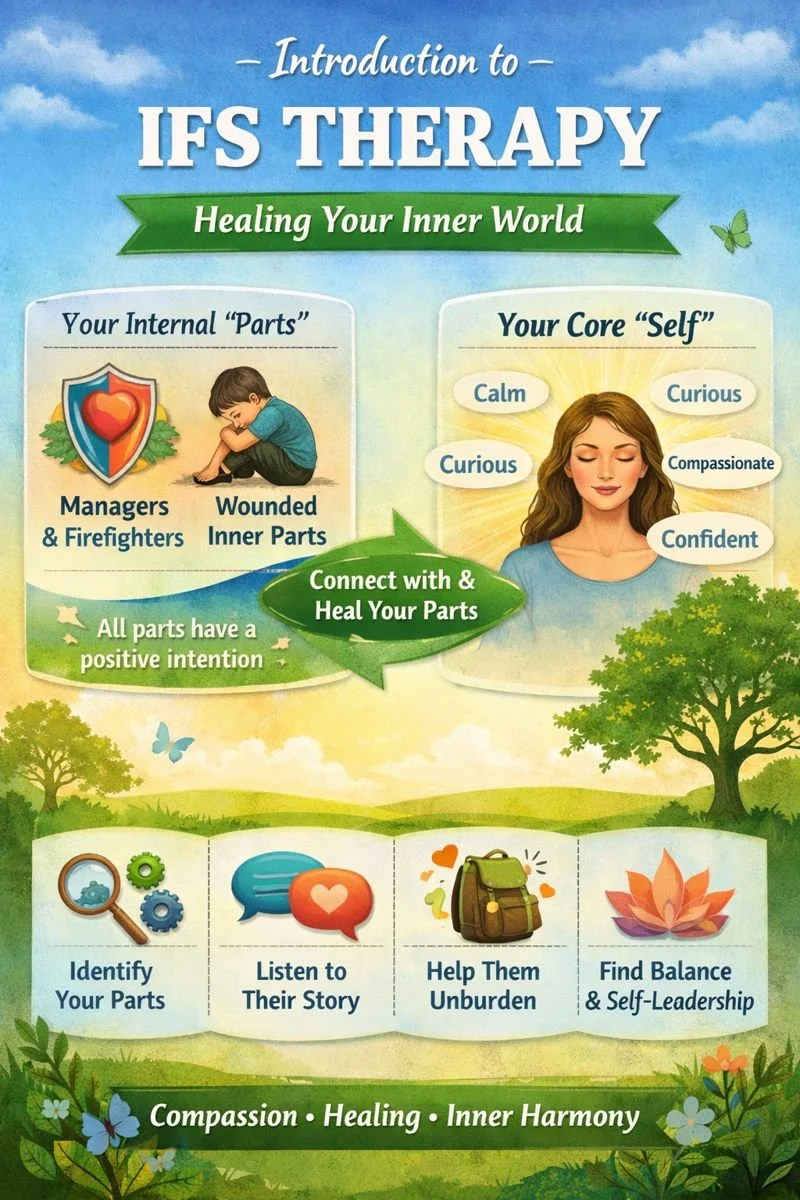
What Is IFS Therapy?
Internal Family Systems (IFS) therapy is a collaborative, evidence-based psychotherapy model that helps people understand and heal the different “parts” within their internal world. Rather than focusing on fixing symptoms, IFS aims to help clients relate compassionately to all aspects of themselves. IFS Institute+1
At its core, IFS assumes:
The mind consists of many “parts” — different sub-personalities with distinct feelings, beliefs, and roles. Psychology Today
These parts are all trying to help in their own way — even if their strategies sometimes create conflict or distress. PositivePsychology.com
There is a central, calm, compassionate Self that can lead the internal system and facilitate healing and harmony. ATTC Network
This approach invites curiosity and compassion toward all parts, rather than judgment or suppression.
Key Concepts Explained Simply
1. Parts
IFS organizes internal experiences into categories:
Protectors
Managers: Parts that try to keep you safe and in control (e.g., perfectionist, critic).
Firefighters: Reactive protectors that jump in when distress surfaces (e.g., numbing behaviors).
Exiles
Parts holding pain, fear, shame, or trauma memories — often pushed away to protect you emotionally. ATTC Network
Every part has a positive intention — even if its strategy causes stress. Psychology Today
2. The Self
The Self isn’t a part — it’s your core essence, marked by:
Calmness
Curiosity
Compassion
Confidence
Clarity and connectedness
When you operate from Self, you can presence-fully relate to your parts instead of being overwhelmed by them. ATTC Network
What Happens in IFS Therapy
In an IFS session, a therapist will:
Help you identify a part that’s showing up (thoughts, urges, emotions).
Support you to connect with that part from a calm, curious place (the Self).
Listen to the part’s story and role — why it tries to help or protect you.
Work toward “unburdening” parts — easing painful beliefs or extreme roles they’ve taken on.
Foster Self-leadership where the Self guides internal decisions. ChoosingTherapy.com+1
Therapy is collaborative and paced according to your comfort and readiness. Good Woman Therapy
What Clients Often Experience
Clients commonly report:
Better understanding of internal conflicts
Increased self-compassion
Less critical internal dialogue
More emotional resilience and freedom
Stronger self-leadership and inner harmony PositivePsychology.com
Sessions can be emotionally engaging, and strong feelings can emerge as parts reveal their roles and histories. This is normal and part of the healing process. Robyn Sonnier, LPC, LLC
What to Expect Practically
No set number of sessions — therapy duration depends on your goals and pace. ChoosingTherapy.com
You remain in control — you choose what parts to explore and how fast to go. Good Woman Therapy
The therapist acts as a guide — helping you relate to parts safely and constructively. Aspire Counseling
Helpful Website Resources
Here are some excellent places to learn more before beginning IFS:
📚 Official & Educational
IFS Institute – What is IFS? (core model & overview)
https://ifs-institute.com/what-ifs-internal-family-systems IFS InstituteIFS Institute Model Outline (deeper outline of parts & goals)
https://ifs-institute.com/resources/articles/internal-family-systems-model-outline IFS Institute
Therapy Guides
Psychology Today: IFS Explained
https://www.psychologytoday.com/us/therapy-types/internal-family-systems-therapy Psychology TodayChoosingTherapy – How IFS Works & What to Expect
https://www.choosingtherapy.com/internal-family-systems-therapy/ ChoosingTherapy.com
Client-Friendly Resource Pages
IFS Resources Guide (books, talks, workshops)
https://www.victoriajanepsychotherapy.net/ifsresources Victoria Jane PsychotherapyIFS-Based Articles for Clients (Intro to IFS)
https://annavincentz.dk/ifs-based-resources IFS & Familieterapeut Anna Vincentz MPF
Intro Video Overview
Intro to IFS Therapy (YouTube) — basic explanation of parts work
(Search “What is IFS Therapy Intro Internal Family Systems” — e.g., videos by Dr. Tori Olds) youtube.com
