
Cognitive Behavioral Therapy (CBT) Overview
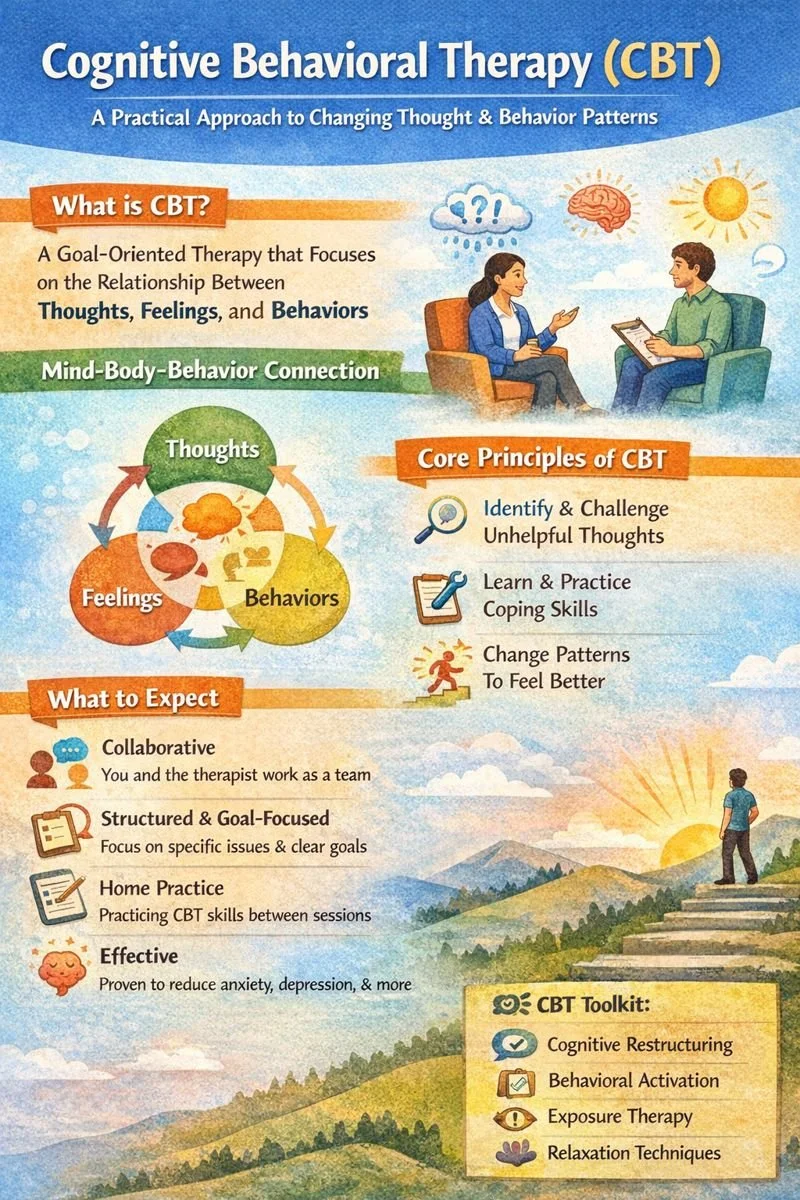
What Is Cognitive Behavioral Therapy (CBT)?
Cognitive Behavioral Therapy (CBT) is a structured, evidence-based form of psychotherapy that focuses on the connection between thoughts, emotions, and behaviors. CBT helps people identify unhelpful thinking patterns and behaviors, understand how they affect emotions, and learn practical skills to create meaningful change.
CBT is present-focused and goal-oriented, emphasizing what’s happening now and what can be done differently moving forward.
The CBT Model (Thoughts – Feelings – Behaviors)
CBT is based on the idea that:
Thoughts influence how we feel
Feelings influence what we do
Behaviors can reinforce thoughts and emotions
For example:
“I always fail” → sadness/anxiety → avoidance or withdrawal → reinforces the belief
CBT helps interrupt this cycle by changing how we think and how we act, which leads to emotional relief over time.
What CBT Focuses On
CBT works on two main areas:
1. Thoughts (Cognition)
You’ll learn to recognize:
Automatic negative thoughts
Cognitive distortions (e.g., all-or-nothing thinking, catastrophizing, mind-reading)
Core beliefs about yourself, others, and the world
The goal isn’t “positive thinking,” but more balanced, realistic thinking.
2. Behaviors
CBT also focuses on:
Avoidance patterns
Safety behaviors
Habits that maintain anxiety, depression, or stress
You’ll practice new behaviors that support long-term change, even when motivation is low.
What Happens in CBT Sessions
CBT sessions are active and collaborative. You can expect:
Clear goals for therapy
Structured sessions with a plan or agenda
Skill-building (not just talking about problems)
Between-session practice (worksheets, reflections, or small experiments)
Your therapist acts as a coach and guide, helping you test new ways of thinking and responding.
Common CBT Skills You May Learn
Thought records (examining and reframing thoughts)
Behavioral activation (increasing helpful activities)
Exposure techniques (gradually facing fears)
Problem-solving skills
Coping strategies for stress and emotional regulation
Relapse-prevention planning
These tools are designed to be used outside therapy, so progress continues in daily life.
What CBT Is Especially Helpful For
CBT has strong research support for helping with:
Anxiety disorders
Depression
PTSD
OCD
Panic attacks
Stress management
Insomnia
Substance use and relapse prevention
Chronic pain coping
It can be used alone or alongside other approaches (e.g., medication, MI, IFS).
What to Expect Practically
CBT is often time-limited (e.g., 8–20 sessions, depending on goals)
Progress is measured and reviewed
You remain in control — you choose goals and pace
Effort between sessions improves results
CBT works best when clients are open to trying new strategies, even when they feel uncomfortable at first.
Helpful CBT Resources (Client-Friendly)
General Overviews
Psychology Today – CBT Explained
https://www.psychologytoday.com/us/therapy-types/cognitive-behavioral-therapyNHS – CBT Overview (very accessible)
https://www.nhs.uk/mental-health/talking-therapies-medicine-treatments/talking-therapies-and-counselling/cognitive-behavioural-therapy-cbt/
Skills & Tools
Centre for Clinical Interventions (Free CBT Workbooks)
https://www.cci.health.wa.gov.au/Resources/Looking-After-YourselfTherapist Aid (CBT Worksheets & Psychoeducation)
https://www.therapistaid.com
Video Introductions
YouTube: “CBT Explained Simply” (search term)
TED-Ed: “How CBT Works” (introductory animations)
In Summary
CBT helps you:
Understand how thoughts, emotions, and behaviors interact
Learn practical tools to change unhelpful patterns
Build skills you can use long after therapy ends
It’s structured, practical, and empowering, focused on helping you become your own therapist over time.
