
Dialectical Behavior Therapy (DBT) Overview
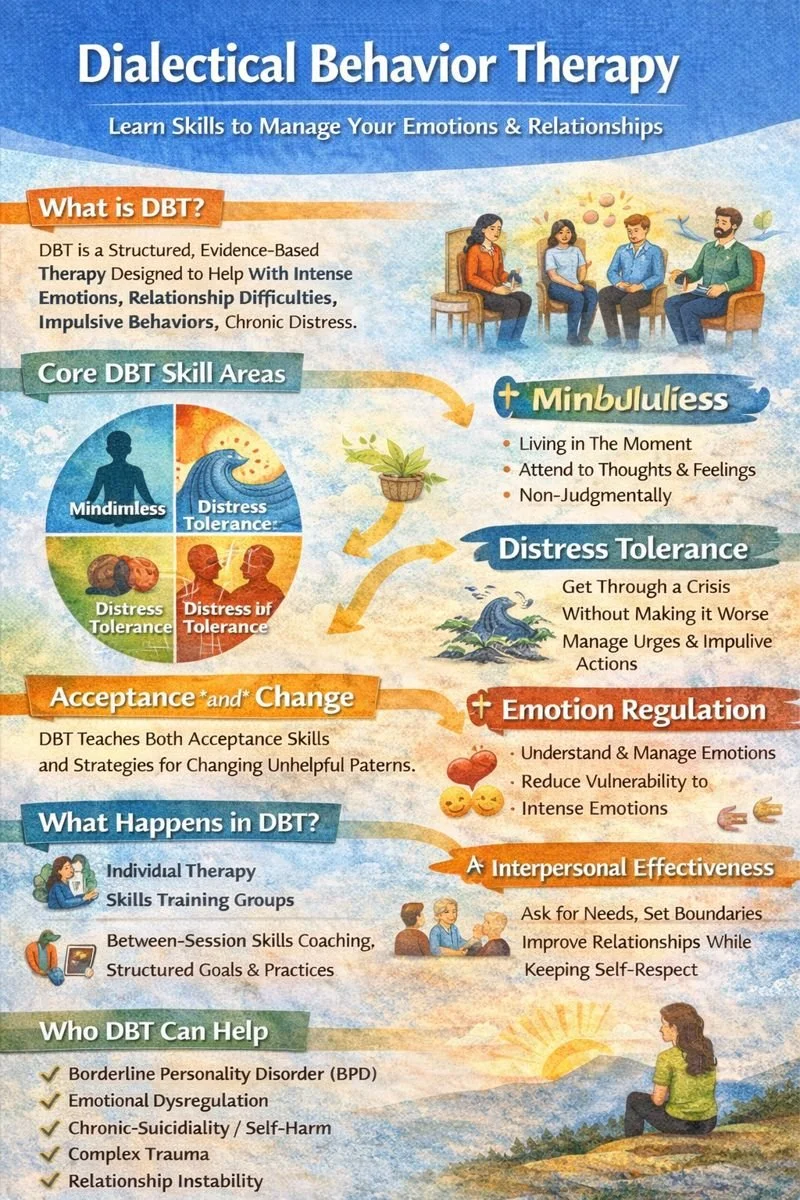
What Is Dialectical Behavior Therapy (DBT)?
Dialectical Behavior Therapy (DBT) is an evidence-based form of cognitive-behavioral therapy designed to help people who experience intense emotions, relationship difficulties, impulsive behaviors, or chronic distress.
DBT was originally developed by psychologist Marsha Linehan to treat individuals with chronic suicidal thoughts and borderline personality disorder (BPD), but it is now widely used for many other concerns, including depression, anxiety, trauma, substance use, and emotional dysregulation.
The word “dialectical” means holding two things that may seem opposite at the same time — such as:
Acceptance of yourself as you are and commitment to change behaviors that cause suffering
🧠 Core Philosophy of DBT
DBT is built on several key ideas:
Your behaviors make sense in the context of your life experiences
Emotional sensitivity is not a flaw
Change is possible without shame or judgment
Skills can be learned to manage emotions more effectively
DBT emphasizes compassion, structure, and skill-building.
🛠 The Four Core DBT Skill Areas
🧘 1. Mindfulness
Mindfulness skills help you:
Stay present in the moment
Observe thoughts and feelings without reacting automatically
Increase awareness of internal experiences
These skills are the foundation of all DBT work.
🌊 2. Distress Tolerance
Distress tolerance skills focus on:
Surviving emotional crises without making things worse
Managing urges during moments of intense distress
Using healthy alternatives instead of impulsive or self-destructive behaviors
These skills are especially helpful when emotions feel overwhelming.
❤️ 3. Emotion Regulation
Emotion regulation skills help you:
Understand and name emotions
Reduce emotional vulnerability
Increase positive emotional experiences
Change emotional responses that feel out of control
The goal is not to eliminate emotions, but to experience them without being consumed by them.
🤝 4. Interpersonal Effectiveness
Interpersonal effectiveness skills teach you how to:
Ask for what you need
Set boundaries
Say no without guilt
Maintain self-respect while preserving relationships
These skills help reduce conflict and strengthen healthy connections.
🧩 What DBT Treatment Often Looks Like
DBT is often delivered as a comprehensive program, which may include:
Individual therapy
Skills training groups
Between-session coaching (e.g., brief phone support)
Structured treatment goals and tracking
Not all programs include every component, but skills training is central to DBT.
💬 What to Expect in DBT Therapy
Clients often experience DBT as:
Structured and practical
Skills-focused rather than insight-only
Supportive and validating
Challenging in a healthy, growth-oriented way
Homework and practice between sessions are common and important.
🧠 Who DBT Is Especially Helpful For
DBT has strong evidence for helping individuals with:
Borderline Personality Disorder (BPD)
Chronic suicidal ideation or self-harm behaviors
Emotional dysregulation
PTSD and complex trauma
Substance use disorders
Eating disorders
Relationship instability
⏱ Time & Commitment
DBT often requires a strong commitment
Skills take time and repetition to master
Progress is measured by improved coping, stability, and quality of life
Many people find DBT challenging at first — and deeply life-changing over time.
🌐 Helpful DBT Resources (Client-Friendly)
📘 Foundational Information
Behavioral Tech (Marsha Linehan’s organization)
https://behavioraltech.orgPsychology Today – DBT Overview
https://www.psychologytoday.com/us/therapy-types/dialectical-behavior-therapy
🧠 Skills & Worksheets
Therapist Aid – DBT Worksheets
https://www.therapistaid.com/therapy-worksheets/dbtDBT Self Help (Very accessible explanations)
https://www.dbtselfhelp.com
📚 Books (Optional Reading)
DBT Skills Training Handouts and Worksheets – Marsha Linehan
The Dialectical Behavior Therapy Skills Workbook – McKay, Wood, & Brantley
✨ In Summary
DBT helps people:
Accept themselves without judgment
Learn concrete skills to manage intense emotions
Improve relationships
Reduce harmful behaviors
Build a life worth living
It is structured, compassionate, and skills-driven, making it especially helpful for individuals who feel overwhelmed by emotions or stuck in painful patterns.
